

It’s been a week since the mid-term election and there has been much said about the plight of the young American adult, forging into their adult life. Taking a little time to read about the concerns that many young American adults are faced with, it’s easy to see why many are frustrated.
As an Mom and now grandmother, yes, the first thing I want to say is, “Being an adult includes making hard choices, self-control and good judgement.” However, in reality, it’s more than that. In comparing the circumstances of the times I was a twenty-something compared to what young adults are faced with today here’s what I see: Young adults have more financial temptations and more to buy than my generation. Think about it, cable tv, subscriptions, gym memberships, travel, destination weddings to stand up in, cell phones, inflated college costs and social media to sell everything from clothes to make-up to nutritional supplements and an increase in services and behavior that have become ‘necessities’ like nails, hair appointments daily stop at the gourmet coffee shop, frequent concerts and going out/entertainment.

Bottom line, there is more to spend money on today. Yes, some of it is discretionary, masking as necessities and there are times in one’s life when they need to buckle down and focus on saving for a goal. However, consider the young adults who have college debt, an entry level job, sharing apartment rent to make ends meet, (or living at home to save) working a job, making it to the weekend, a little going out, and occasional trip for a friend’s wedding and the costs that participating involves, maybe there was a Bachelor / Bachelorette party trip, cha-Ching, cha-Ching, cha-Ching! Then they meet their person, maybe they get married, they put off having kids until they can afford a house, that takes time, then they are well into their thirties, save for a kids future, their retirement. It all seems so expensive, overwhelming and how can they do it?
What is the solution? Life IS expensive. Where would I begin if my kids were embarking on adulthood now and in their teens? The first thought that comes to mind is and education in finances and from an early age. As a parent, we want to give our kids the best life and all of the things that we think they need. At some point, a little financial education needs to take place and there are a variety of ways to do it. It can start with a weekly allowance for chores done around the house in age appropriateness, giving kids opportunities to start contributing to their fun, clothes, toys, savings, contributing and any other expenses. For example, “You want to go to that concert, it could be your Birthday Gift or depending on the age of the teenager, “if you want to see __________, you can pay for it.” Also, deciding what you will and will not pay for. For example, I don’t think I would have made a decision to pay for my daughter’s nail maintenance. We just wouldn’t be spending money for that, but every family has their own line and what they think is necessary. Kids who have been accustomed to parents paying for or having lots of stuff, will have learned that these things are ‘necessary’ to have in life. If kids are used to from an early age, saving, parents show them how a savings account can grow, grandparents/aunts and uncles can contribute to that account for Birthdays and Holidays, it can be a rewarding thing for a kid and they can develop a genuine interest in savings and if they have watched it grow, most likely they will spend it wisely. These lessons take years to teach and can yield a lifetime of benefits…

In the last three previous weeks Teaching Tuesday lessons have focused on the skills and training kids need following high school. These lessons covered selecting educational programs that were affordable and financially sensible for a family’s circumstances. This can be a very valuable lesson and the path you help your young adult prepare for can give them skills that will allow for them to have doors open, marketable skills and possibly the ability from an early age to start saving. Here’s what I mean. In helping your kids decide what career path they will choose, going to college with no major can be detrimental to your kids financial future, with the expense of college these days. If your child needs to go away to school to study education, nursing, prepare for applying to law-school, medical school, engineering, medical technology, etc. then the expense could be worth the time and effort. If your child gets scholarship money for room and board or tuition, and incidental/travel expense and books are all that you will be outplaying, going away to college can be a worthwhile thing. If the cost is a stretch for the parents or if the parents or kids are strapped with a student loan that will be a stressor to pay back if the young adult’s post college salary will not be high enough for them to reasonably pay back, then pencils need to be sharpened and maybe the local college or community college needs to be explored…
Consider this. In our area in the Flint area in Michigan, if you are a resident of Genesee County, you can attend Mott Community College at no cost. Yes, NO COST! Over the weekend, I looked at the majors courses of study available. LOOK!!!!
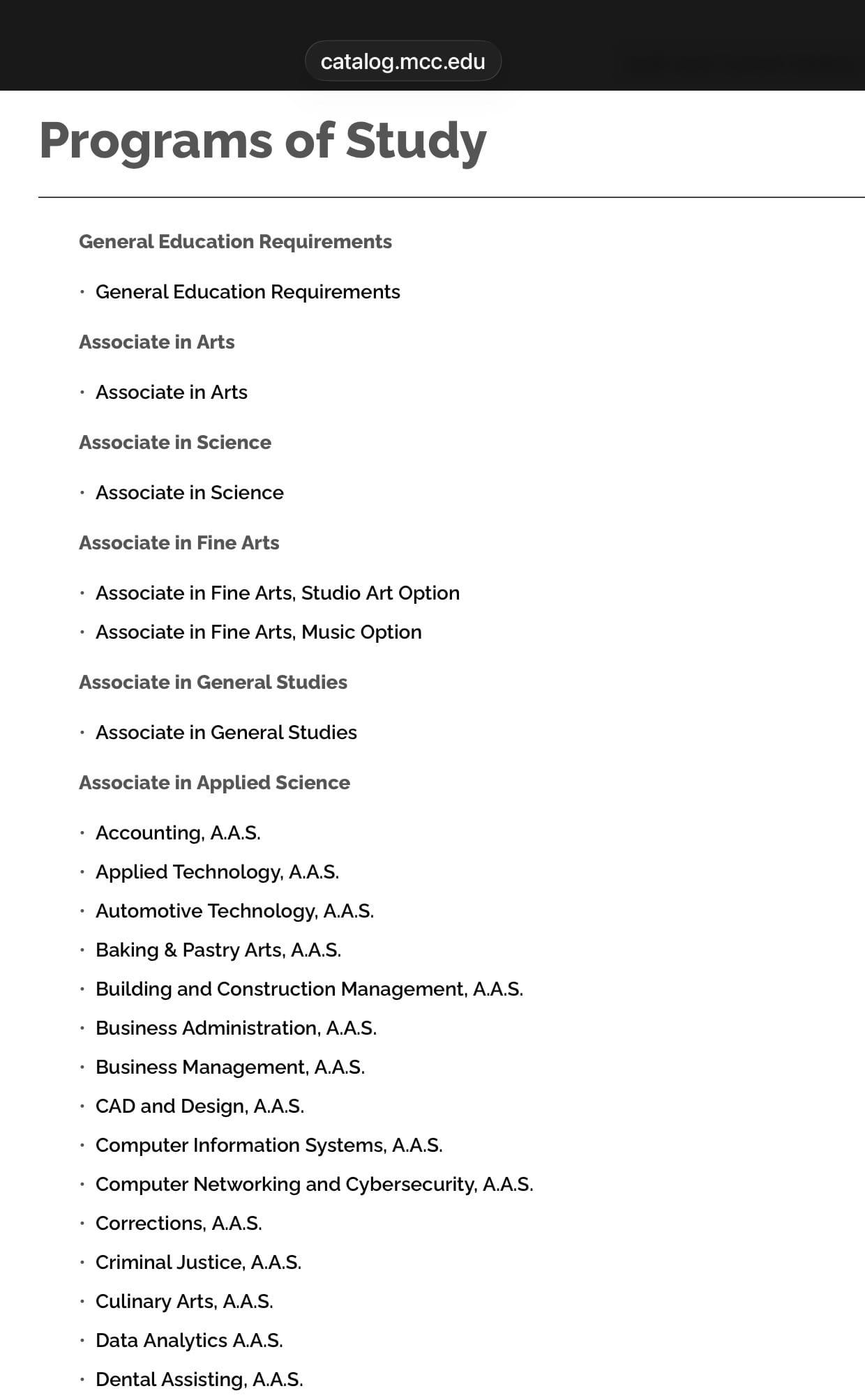
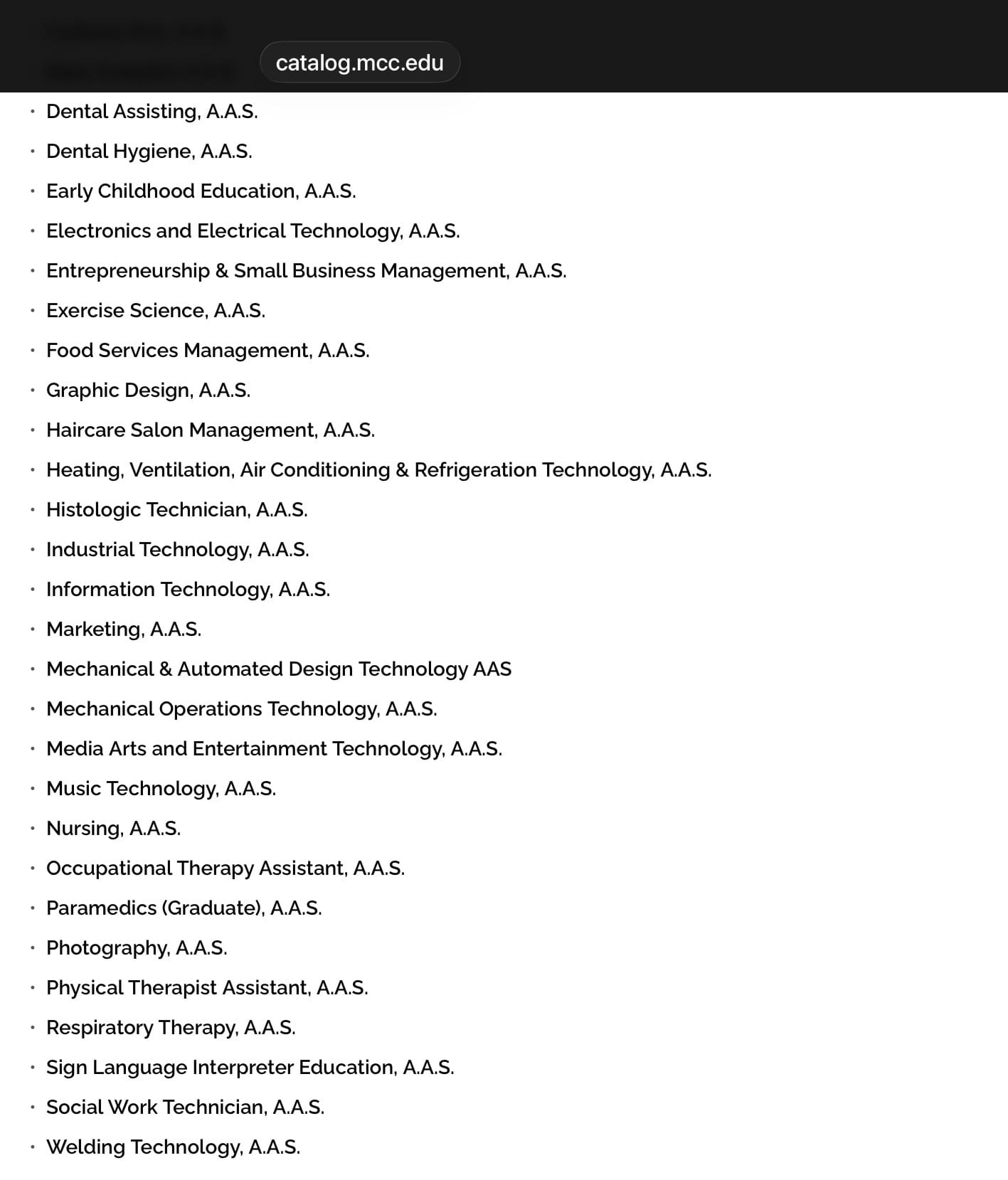
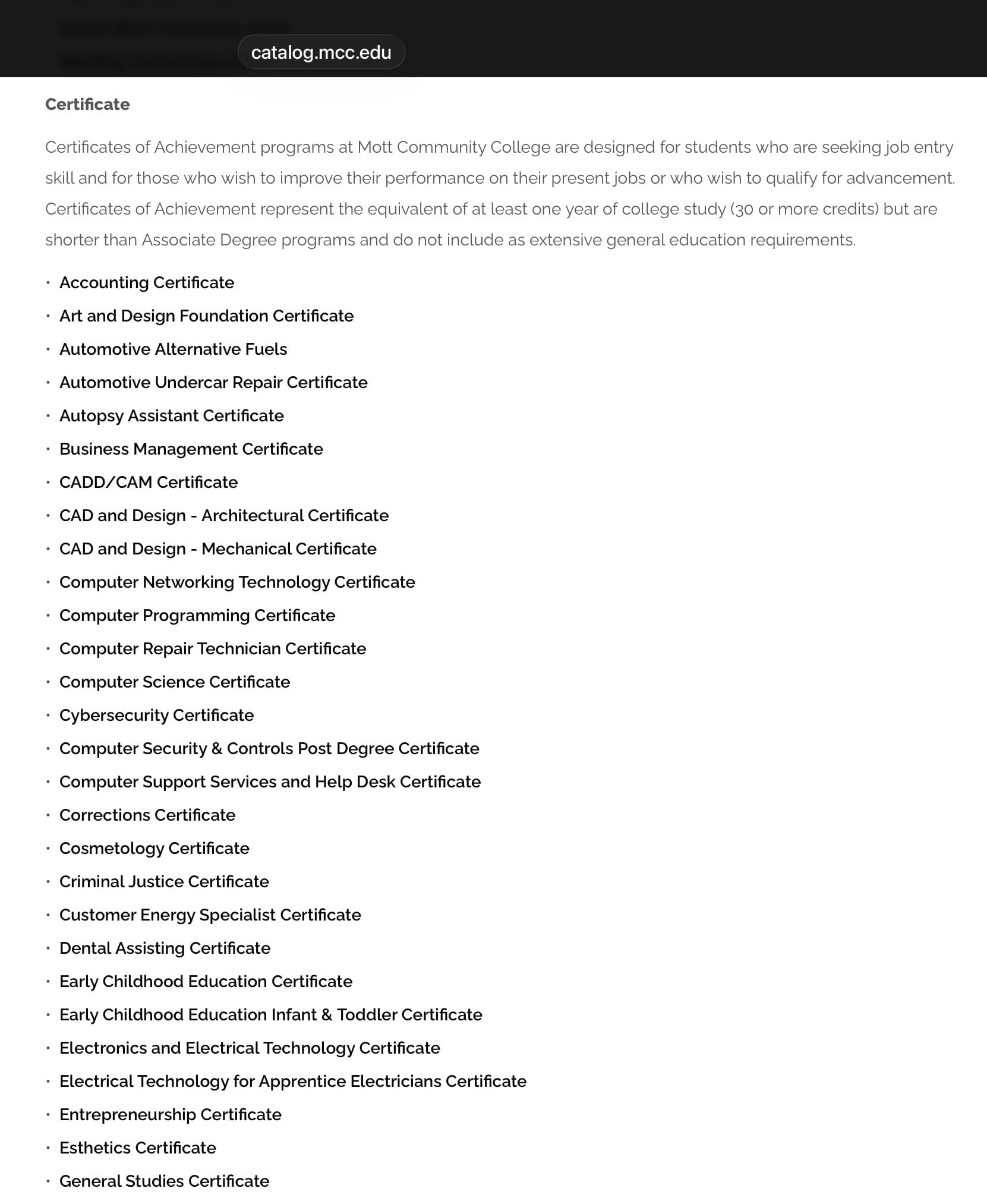

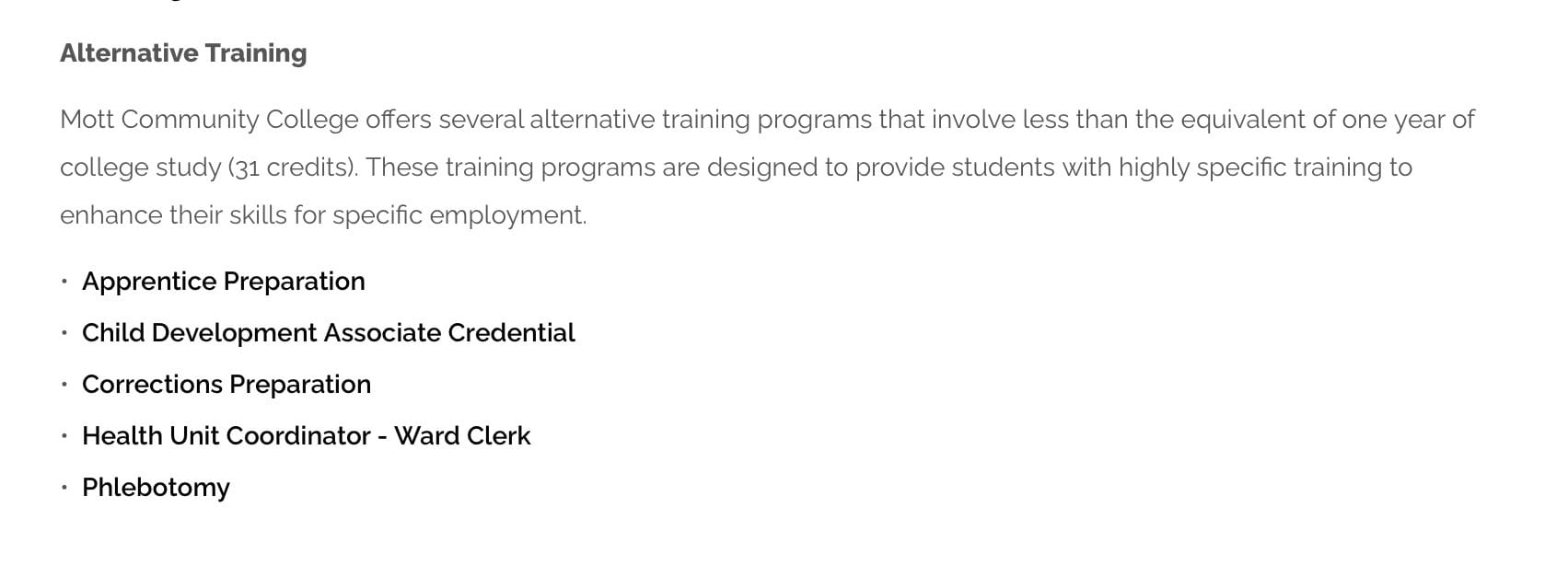
What options! And at no cost! So, someone could graduate from high school, live at home, maybe hold down a part time job and gain skills that would allow them to be employable. Some of these areas are most certainly recession proof. Consider a nurse, phlebotomist, dental assistant, dental hygienist, nail tech, cosmetologist, among others?! Some of these skills are necessary for any community across the country. AND if you graduate with no debt for your education, as soon as a young person enters the work force, they are able to start ‘adulting.’ They could gain experience working for a company, move up or use that experience to eventually open their own company. Gaining a worthwhile (worthwhile in meaning that “I have a skill that allows me to get a job making a good income, more than minimum wage, that have a capacity to support myself and eventually be able to provide for a family, save, etc.”) job with meaningful work can open doors and opening doors can give these young adults choices. Having choices can give a person a feeling of freedom and self worth. When a person has self worth they gain confidence and if they meet the right person, getting married and building a life together having the opportunity to have a family if they wish to. I would hope for any young adult to have such doors open to them so that they can choose a path that is right for them rather than doors closed and not having choices and options…

What are some things that our government could provide for young people to have opportunities so that they can have choices? Well, community colleges with training programs available around the country like Mott Community College above is a start and many other communities have such situations.
Secondly, savings programs and incentives for parents, as what the current Trump accounts have started for children and foster children is a step in the right direction, I feel. Read up on this, don’t take my word. What I like about these is that parents can open these accounts, the government gives each child, I believe, $1,000. Parents, aunts, uncles can add to it. For parents to show their children how the accounts can grow on a screen, can start discussion of savings, incentivize kids to add to it. This can generate a saving mentality for a family…
Financial education in the schools. In my mind, this is imperative! Parents can up their level of what they teach at home. Games like Monopoly, LIFE and having your kids take Dave Ramsey classes is something I would recommend. My kids grandparents paid for them to take a Dave Ramsey class when they became engaged to get off on a good start. Good knowledge of finances can start young and parents can ‘add’ to these lessons with age appropriate and basic and adding to that. An example I like to use is the multiplication/devision facts. These skills are taught after the kids have down cold addition and subtraction facts inside and out, which is usually third grade. I remember doing flash cards, we had all four sets, and it was a constant thing at the time, in the car, before bed, during breakfast once or twice so that the kids knew these facts because everything beyond this in math is based on knowing COLD these facts. I would tell parents when I taught 3rd grade, “If you don’t do a good job with these basic facts, your kids will be slaves to calculators and they’ll be teenagers and they won’t know them. Don’t miss this opportunity!!! Do it now and they KNOW IT!”
It’s a slow hand off, teaching your kids good financial skills and each family has their own way of this and it’s fun to LOOK FOR opportunities to teach these lesson on many fronts. When you take your kids in for their physical or a sick call at your family doctor’s office, utilize that experience. “Dr. Brown takes good care of our family, he deserves to be paid when he does his job.” When you go to pay, if you have a co-pay rather than complaining about the $15 co-pay, I have heard people complain when I am sitting in the waiting room, “Why do I have to pay that?” Explain to your kids that this is required by insurance companies, it’s actually the law and healthcare providers can loose their license if they don’t charge all patients the same, requiring that payment. It’s important for kids to understand that the things you provide for them COST money (at an age appropriate time). “We appreciate Dr. Brown and all he does for our family, we are glad to pay for him to take care of us because we value his knowledge and what he does for us.” If kids don’t learn that health care costs money and one’s responsibility to either pay for their expenses, budget money for these items/for insurance or prepare themselves for a job that will provide good health care, they won’t value it. I learned this as a child. My Dad had a small business and we had basic insurance, which covered the big stuff, we had a deductible, so I saw my Mom whipping out the checkbook. And she would say in the car, “Your Dad and I are glad to pay for Dr. Lindman to take care of us.” If kids don’t understand what you are covering for them-again at the correct age-they will come to think that these necessities in life are not something they need to plan for in life. As a teacher and growing up in a General Motors town, I saw the benefits of what a large company can provide. Again, another good discussion for teenagers as they are planning a future and a career path. Lots of great discussions. There’s no blame passed on here; schools can do it, families can do it so that kids have some good financial knowledge going into adulthood.
Another thing the government could do is devise an effective program for first time home buyers. I am not the person to set this program up because I don’t know the ins and outs of banking but there are smart people who could set up a program that helps young people by educating them on saving and buying a house in their price range, that they can afford. A friend of mine’s mother used a phrase, “You don’t want to be ‘House Poor!!’” meaning buy a house that allows you to afford the additional expenses and ‘life’ so that it is not a stressor to have a house. Maybe some tax credits, lower interest rates or requiring less money down (as long as these factors don’t lead to people buying homes they will have a hard time maintaining and it does them a disservice, getting them in a worse financial situation. This would require adequate screening and possibly keeping in touch with home owners after the sale for support and guidance. That’s hard to set up(maintain and police). There are creative people out there who could design a program that benefits the young home buyers without allowing for fraud or taking advantage of the system-and we all have seen so much of that lately, haven’t we?
If young people feel optimistic about their future, if they have meaningful employment and adequate income, they will be more likely to feel empowered and part of an economy and adult society. I like the saying and have mentioned it before, “Give a man/woman fish, they live for a day. Teach a man/woman TO fish and they will eat for a life time.” YES! Helping our young people gain education/training/skills can help them gain a sense of self worth. This gives our young adults a sense of self worth and a sense of confidence that money can’t buy. I love that!
As a parent, this was one of my favorite season of parenting. We enjoyed exposing our kids to different career paths and opportunities. I Enjoyed the discussions that usually started like “What if_______” or “What do you think about______?” We had a really nice older neighbor and the kids loved cutting Mr. (& Mrs. Gorton’s) lawn. He liked paying the kids with cash. If he wasn’t home when they cut his lawn, he would come to our front door and he liked counting out and handing them the cash. They had raised eight good kids and he too loved teaching kids lessons on being smart with their money and the value of working hard for a dollar. I would sometimes see them sitting on the front porch listening to Mr. Gorton taking to them. These little lessons along the way from you, grandparents, trusted friends and teachers can have a life long impact on your kids. Don’t miss the window of opportunity to teach these very valuable lessons to your kids…It’s a Great Day🍎